
.jpg)
Soundproof Home Design Ideas for Modern Apartments and High-Rise Living
City life is generally accompanied by one thing; noise. In flats and skyscrapers, wall and floor sounds carry no trouble because of traffic, neighbors, elevators, construction and so forth. Persistent exposure to noise not only interferes with routine operations, but also influences sleep, concentration and mental health. Due to this fact, soundproof home design and modern acoustic interiors are some of the soundproofing values that many homeowners are considering to establish a quiet and comfortable home environment.
Acoustic interior design aims at the control, absorption and minimization of unwanted noise in a residence. It does not merely block sound but enhances the behaviour of sound within an environment. Apartments with the right materials, layouts and finishes can be transformed to amongst the peaceful environments despite being in a busy city.
Understanding Acoustic Interior Design
Acoustic interior design is the term used in reference to the design and utilization of material that regulates sound in indoor settings. The aim is to minimize noise pollution and enhance better sound clarity and comfort.
Sound penetration in apartments is done through walls, ceiling, floor, windows, as well as through the system of ventilation. Acoustic design functions with the presence of sound waves, which are absorbed, and reinforcement of noises that do not produce echoes and avoid the spread of noises in rooms.
Acoustic interiors are the opposite of the traditional soundproofing that tries to prevent any sound but rather provides a balance of sound. This method finds great application in high rise houses where the full isolation of sound may not be feasible.
Why Soundproof Home Design Is Important for Urban Apartments?
Due to the density of the urban areas, there is a greater distance between the apartments than it has ever been. Close walls, common structures, and traffic congestions are the factors that lead to constant background noise.
A soundproof home design has a number of advantages to apartments.
The acoustic solutions that are of interest to homeowners are based on the following sources:
Eliminating the noise of neighbors and surrounding apartments.
Reducing traffic and sound outside of the city.
Working at home and getting more focused.
Increasing privacy in the discussions.
Providing serene bedrooms and relaxation areas.
A less noisy domestic setting assists in heightening productivity, relief, as well as life quality in general.
Effective Materials Used in Acoustic Interiors
Sound control in a home is very much dependent on the materials. Some surfaces will absorb the sound and others will reflect the sound and therefore, may reduce or increase noise.
Sound-absorbing materials are common in acoustic interior designs and they enhance the acoustic performance of interiors without interfering with beauty.
Standard materials used are:
Soundproof boards and acoustic wall panels.
Thick carpets and area rugs
Wall and furniture covered with fabric.
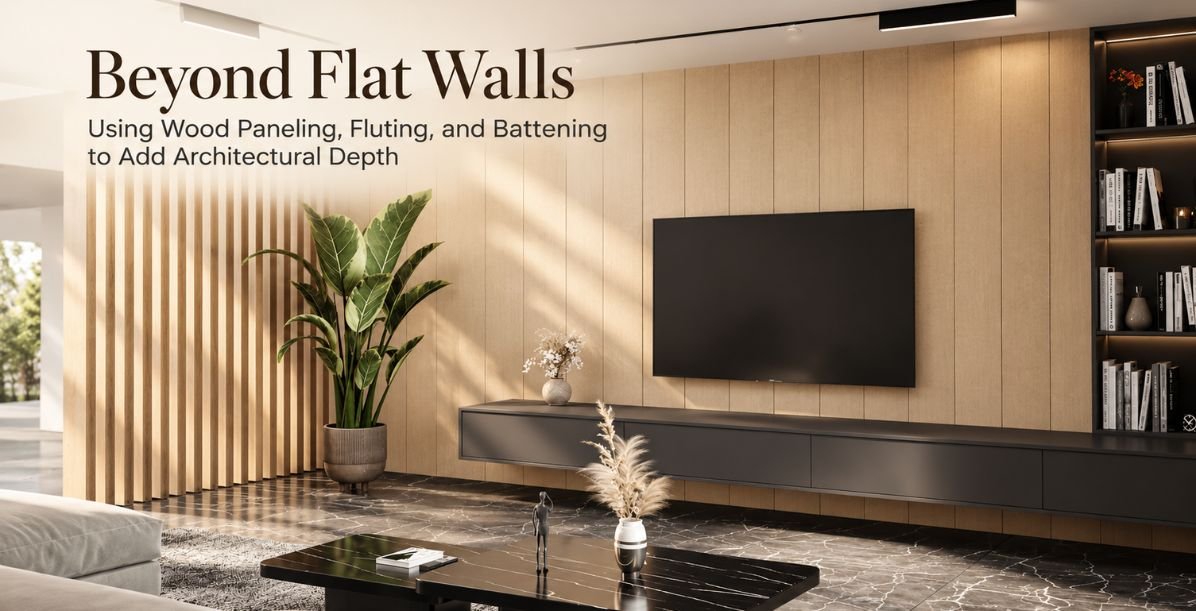
Wooden acoustic panels and slatted walls.
False ceilings and acoustic ceiling tiles.
These are substances that absorb sound vibrations and do not allow the noises to be reflected throughout the room.
Room-Specific Acoustic Design Strategies
There are various acoustic requirements in various rooms within a house. The living rooms and home offices should have controlled sound levels with bedrooms having an environment that is quiet enough to facilitate sleep.
Proper room-wise acoustic plans are:
Padded-headed-bedrooms with heavy curtains.
Rugged living rooms, bookshelf and fabric sofas.
Acoustically-walled home offices and doors with seals.
Sound-absorbing media rooms.
Textured surfaces in hallways to minimize echoes.
These architectural elements serve to ensure that there is balanced sound within the whole apartment.
Role of Layout and Furniture in Sound Control
Materials are not the sole means of achieving acoustic comfort. Sound behavior is also affected by the arrangement and arrangement of the furniture and interior design.
Fabrics with soft furniture will absorb the sound and empty spaces are prone to creating echoes. Big pieces of furniture such as bookshelves and wardrobes can as well serve as sound barriers to other rooms.
Adequate furniture layouts can minimize bouncing off of the sound, and the acoustics of a room are enhanced by proper arrangement of furniture. To illustrate, hard floors can be covered with rugs or fabric curtains can be used in place of blinds and this would greatly cut down the levels of noise.
The open layouts must be well balanced by use of partitions or acoustic panels to ensure that the sound does not spread to the other parts of the apartment.
Challenges in Achieving Perfect Soundproofing
In spite of the fact that acoustic interiors are very effective in enhancing sound comfort, full soundproofing of apartments may be challenging. Major modifications are usually hampered by structural limitations, common walls and building rules.
Professional acoustic materials can also be a bit costly to some home owners than ordinary finishes. Nevertheless, even minor changes like heavier curtains, carpets, and furniture can make a significant change.
There is also the issue of ensuring that aesthetic appeal is retained yet incorporation of acoustic solutions is included. Luckily, the current acoustic panels and materials have come in trendy designs that won’t be even noticeable to the interior design.
Conclusion
In the modern hectic city life, it has made it a necessity to regulate the indoor noise levels in order that people can live comfortably. Acoustic interior design is practical in terms of minimizing bad sound which is not desired and enhancing the general ambience of the apartments and high rise homes.
Households can provide serene spaces even in urbanized areas by integrating considerate designs, acoustical fabrics as well as appropriate furniture positioning. Nowadays, with the popularity of soundproof home construction and higher levels of acoustic interior, apartments are getting less noisy, more personal, and more conducive to work and relaxation as well as normal life.
The acoustic home is well-designed and can decrease the level of noise in addition to enhancing mental sharpness, productivity and long-term well-being.
.png)
.png)
.jpg)





 Chat With Diva