
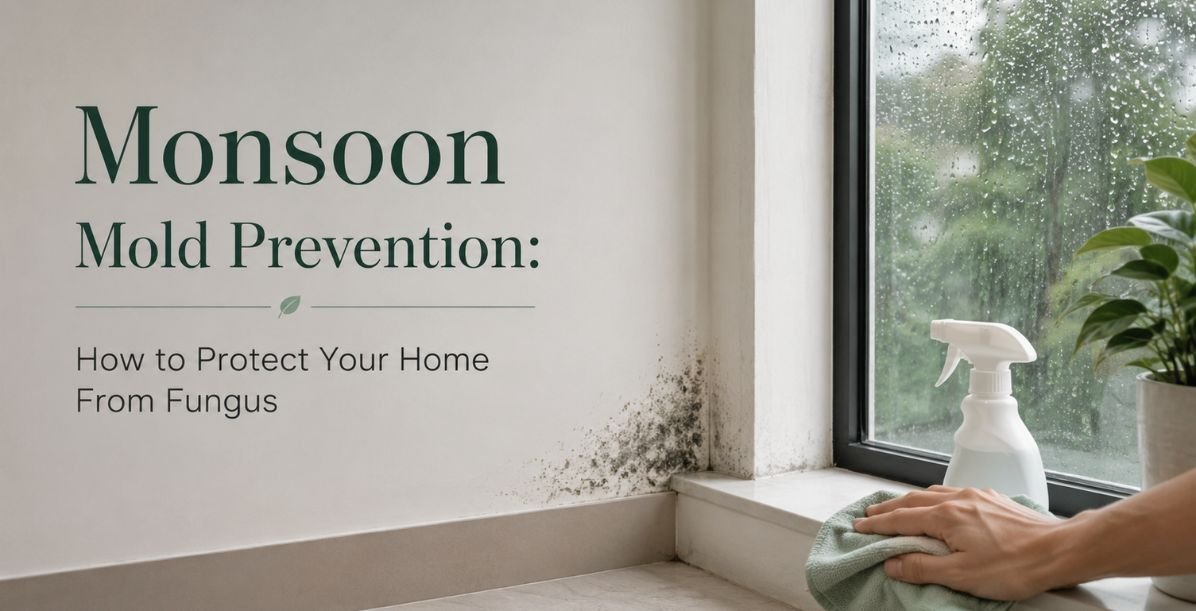
Monsoon Mold Prevention: How to Protect Your Home From Fungus
The slight earthy odor around a wardrobe or the dark spot that develops on the corner of a wall could sound like a small monsoon problem. But these are the early signs of mold or fungal growth.
In the rainy season, the moisture in the air remains longer. The walls dry slowly, clothes stay damp, and bathrooms stay wet all day. These factors can contribute to the growth of fungus in the interior of homes, particularly in low-ventilation spaces.
Proper prevention of mold begins by controlling moisture and preventing mold patches from spreading. If you make a few changes in your daily routine and home decor, your home will be cleaner, fresher, and easier to clean during monsoon season.
Where Does Fungus in the Home Usually Begin?
Molds don't always begin in an obvious area. It is frequently found in dark corners of the home that home owners do not check.
Mold and fungus can manifest themselves in the following areas:
Behind large furniture: Limited airflow can trap moisture between furniture and walls.
Inside wardrobes: Closed spaces and damp clothes can create humid conditions.
Below kitchen sinks: Small plumbing leaks may remain unnoticed for weeks.
Around window frames: Rainwater and condensation can collect near poorly sealed windows.
Bathroom ceilings: Steam and weak ventilation may keep ceilings damp.
Early detection will make it easier to control moisture issues. A small patch might be ignored, and this can lead to it spreading to nearby surfaces.
The First Rule of Mold Prevention: Find the Moisture
Cleaning a mold patch is not enough if the source of moisture remains. A leaking pipe, damaged window seal, roof seepage, or poor bathroom ventilation may be causing repeated dampness.
To prevent mold, inspect:
Plumbing connections: Test for slow or concealed water leaks.
Windows: See if there are any broken seals that allow rainwater into the house.
Walls and ceilings: Check for seepage, cracks or peeling finishes.
Ventilation: Ensure bathroom and kitchen extractors are in good working condition!
Drainage areas: Do not block balcony/roof drainage paths.
One of the most critical measures for protection in the long term is the solution of the moisture problem.
Give Your Walls and Furniture Some Breathing Space
While a room could appear organized and tidy, if there is not enough ventilation, it is more likely to hold moisture. Refrain from pushing furniture, such as wardrobes, sofas, and wooden cabinets, against walls that are likely to become damp.
Keeping a small clearance between furniture also facilitates the circulation of air behind it and helps to spot early signs of moisture. Sun and air can also be blocked around windows with heavy curtains.
Open curtains and windows to get fresh air during dry spells, if the weather is suitable. This easy interior modification can help maintain mold-free without redecorating the room.
Stop Fungus in Home From Taking Over Wardrobes
One of the most frequent sources of the dampness of the monsoon is the wardrobe. Closed doors, stuffy clothes, and little airflow provide the perfect conditions for moisture to accumulate.
Avoid putting soiled laundry in a wardrobe. Let washed clothes dry thoroughly before storing. Use appropriate moisture absorbers and ventilate the wardrobes frequently as well.
Avoid overfilling shelves. These clothes must be able to air out, especially in the winter when it's wet. When you detect a musty odor, check the back panels and corners rather than just spritz with a perfume spray.
Bathrooms and Kitchens Need a Different Mold Prevention Plan
The bathrooms and kitchens are always moister than the others. This moisture can take more time to evaporate in the monsoon season.
Use an exhaust fan and keep wet surfaces as dry as possible in the bathroom. Regularly inspect tile grout, ceiling corners, and washbasin surroundings.
Check for leaks in cabinets in kitchens below the sink. Have dry surfaces on counters and allow steam to escape from the cooking area. Such areas must be periodically cared for, as fungus in the home can develop during long wet periods.
Your Furniture Materials Matter More During Monsoon
Your home's interior can be impacted by the materials you use in your home.
For areas with moisture, keep in mind these options:
Moisture resistant boards: There are materials available which limit cabinet damage from moisture.
Extra protection via protective laminates: High-quality surface finishes provide additional protection.
Treated wood: Wooden furniture subject to proper treatment is better in humid environments.
Water proof finishes: These are great for kitchens and other areas where there are moisture issues.
Use materials appropriately in cabinet construction: Use materials in each room accordingly.
At The Wooden Strings, interior design is about looks and practicality. The selection of materials in relation to the seasonal changes of the room can make it easier to maintain the interior of the room.
A Quick Monsoon Routine for Better Mold Prevention
You don't need to check all corners of your house every day. There are some easy steps you can take every week to spot problems early.
Look for fresh patches on walls, investigate any unusual damp smells from wardrobes, check below sinks, and look around window edges following heavy rain. Wipe off any surface wetness and don't let damp clothing sit for extended periods in the home.
When mold continues to reappear, grows in extensive patches or is found in conjunction with major water damage, seek a professional opinion on the moisture source instead of covering the area over and over.
Don't Hide Mold Behind Paint or Furniture
A common error is to paint over a wet wall. Sometimes the patch is covered by fresh paint, but if the moisture is not eliminated, the issue may recur.
Likewise, the warning signs are hidden by covering them with furniture on a damaged wall. Identify the source, give the area a thorough cleaning, and apply the proper treatment before refinishing the finish.
It's a matter of fixing the cause of mold, rather than fixing the damage.
Designing a Home That Handles Monsoon Better
The interior design can be of practical help to alleviate moisture issues. Planned ventilation, appropriate materials, easily accessible storage, and well-placed furniture can make seasonal maintenance easier.
The Wooden Strings designs interiors that are both fashionable and functional. A house can be made ready for humidity while maintaining a pleasing appearance by taking into account room conditions, durability of materials, and practical layouts.
Conclusion
Finding fungus in home interiors during monsoon can be frustrating, but early action can prevent the problem from becoming harder to manage. First, locate moisture sources, enhance air movement, inspect hidden corners, and dry wet areas.
Most importantly, take occurrences of dampness as alarm bell signs and not cosmetic concerns. With some extra care and attention to the interior and a few simple steps to prevent mold, your home can keep you comfortable and organized all season long.
Wooden Strings works to bring beautiful homes and functional interior planning together by using the right materials and the right designs.





.png)



 Chat With Diva