
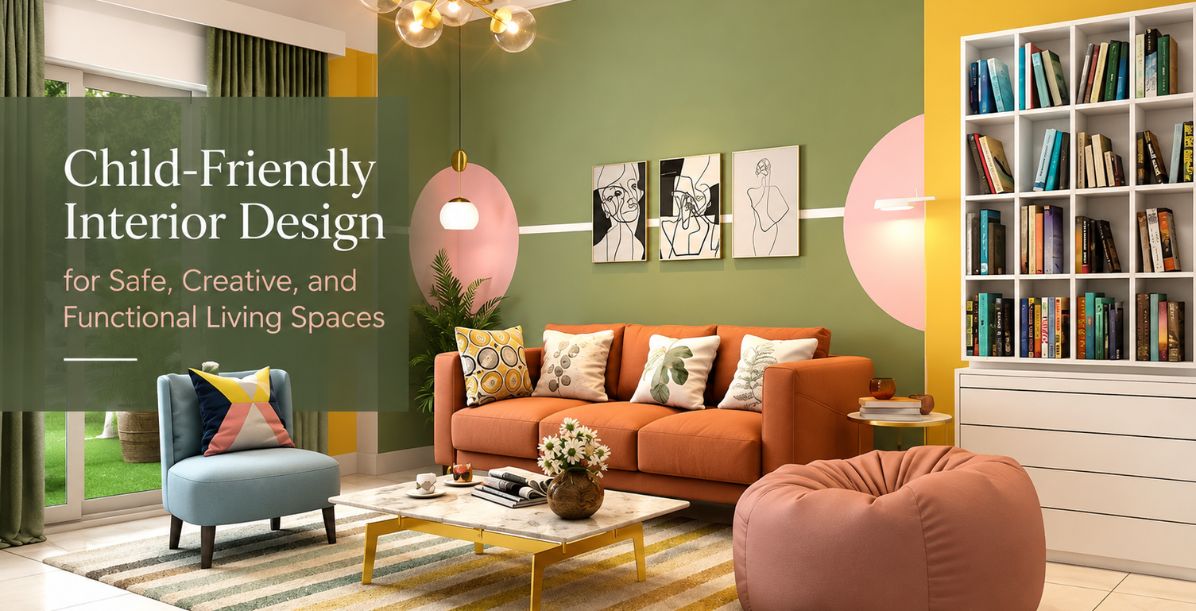
How to Design Child-Friendly Interiors for Safe and Happy Living
Creating a home for kids is much more than matching the colour of the walls and picking out the right toys. Designing a space for the student should be creative, support learning and, most importantly, be safe. In this modern world, the interior of children's rooms is now more and more becoming a child-friendly space which develops along the way of children's growth and is also comfortable and functional.
When a child-friendly home design is planned, it makes a place where children can play, learn and sleep without restrictions. Whether it's choosing safe materials or integrating clever storage solutions, every detail counts in creating a space for children and parents.
Creating a Safe Foundation for Children
When it comes to designing spaces for children, safety is the primary concern. Children are naturally curious and their environment should support their activities of investigation.
Some important safety features to take into account are:
Avoid injuries with furniture with rounded edges.
Use anti-slip flooring to avoid falls.
Secure heavy furniture to walls
Use paints and finishes that are not harmful.
Cover electrical outlets and hide wires properly
Soft furnishings like rugs and cushions also decrease the odds of having an accident, and make the room more comfortable.
Smart Kids Room Interiors That Grow with Your Child
A child's needs change with time and are subject to rapid change. Parents can buy a flexible product instead of redesigning rooms often, which can change as their children age.
For example:
Adjustable Study Tables can be used for many years to come.
Convertible cribs can be changed to toddler beds.
The modular storage units can be moved around to accommodate changes.
Neutral furniture will effortlessly complement the different decor schemes.
These flexible interior designs for kids' rooms are cost-effective and durable.
Choosing Child-Safe Materials and Finishes
Materials are a significant part of all the components that make up healthy environments for children. His children frequently crawl, touch and play on various surfaces, so the choice of materials is vital.
Consider using:
Low-VOC or VOC-free paints
Natural wood furniture
Organic cotton bedding
Hypoallergenic fabrics
Durable and easy-to-clean surfaces
All of these selections can help to enhance indoor air quality and make the indoor space more conducive to the healthy development of the young.
Designing Spaces That Encourage Creativity
A child's room should be a place where imagination and self-expression are encouraged. Creative spaces promote emotional and thinking skills and also provide a fun learning experience.
Promote creativity by means of:
Art and Activity Corners
Set aside some space for drawing and painting or making crafts. When materials are readily available children are encouraged to use their skills.
Interactive Walls
Children can freely express themselves and personalize their rooms with chalkboard paint, magnetic boards or pin-up spaces.
Reading Nooks
Soft seating, a cosy reading corner and bookshelves foster a love of reading from an early age.
Creative elements make ordinary rooms engaging environments, where children can thrive.
Functional Storage Solutions for Organized Living
Children can have toys, books, clothes and school items that can easily build up clutter. Good storage helps to keep things tidy and teaches children how to organize.
A few storage suggestions are:
Under-bed drawers for extra storage
Have books and toys on open shelves
Labelled baskets and bins
In-built built-in wardrobes with child height sections
The design of multi-functional furniture with hidden compartments.
A neat and tidy room also provides more space for children to play and move without danger.
Balancing Play Areas and Study Zones
In modern houses, it is often necessary for children to study and play in the same room. Creating separate areas in the room enhances focus and functionality.
A well balanced design for a child friendly home typically consists of the following:
A quiet area for study with appropriate lighting.
Open play areas for physical activities
Comfortable sleeping spaces
Convenient storage close to activity areas.
This zoning strategy enables children to sustain routines and facilitates learning and recreation.
Using Colors and Lighting Wisely
A child's mood and actions are greatly affected by the colors and lighting. Light, sunny colors will help to inspire creativity, while darker hues will help to calm them down.
When selecting colors:
Relax using pastel colours.
Include pops of color for liveliness.
Don't use dark colors in small rooms.
Natural light should be maximized to the greatest extent possible. Have several types of lights – overhead, reading, and night – to make for a comfortable environment day and night.
Creating Inclusive and Flexible Family Spaces
Child friendly design can be incorporated in any room. Family living areas, including living rooms, dining areas, should also be available for use by young children.
Parents can help to make shared spaces safer by:
Using washable upholstery
Selecting durable materials
Adding soft rugs
Designing toy storage facilities
Ensuring open spaces for circulation
Designing a child friendly home requires planning to make sure all family members feel comfortable and safe.
Conclusion
Creating a space for kids should be balanced for safety, creativity and functionality. Well-designed children's room design encourages development, learning and imagination and evolves over time. With the right materials, flexible furniture, and clever storage options, parents can make homes safer and more comfortable for every day of the year while fostering their children's growth and development.
A successful child friendly home design is one that will develop with children, offer opportunities for them to explore and be safe, creating memories that will last a long time.
.png)
.png)
.jpg)

 Chat With Diva