The modern office is no longer just a place to work—it is a strategic tool.
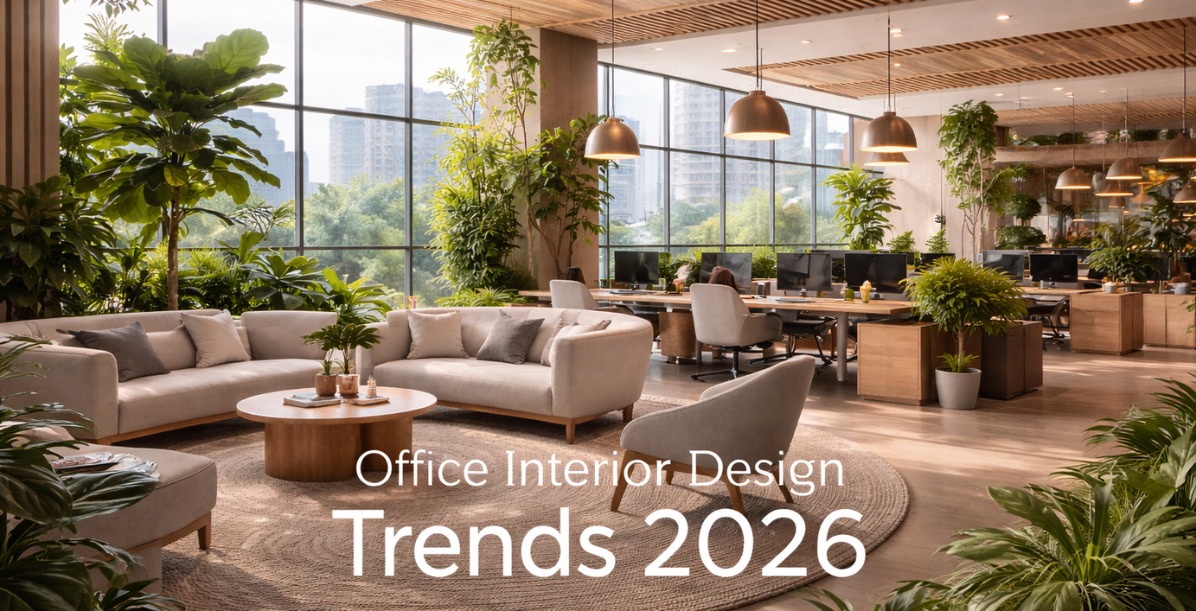
By 2026, office interiors in India are being redesigned to attract talent, support hybrid work, improve focus, and reflect brand identity, all while keeping operational costs and flexibility in mind. Companies are moving away from rigid layouts and superficial aesthetics, and instead investing in spaces that work harder for the people inside them.
This guide breaks down the most important office interior design trends of 2026, not as buzzwords—but with clear intent, implementation logic, and real-world relevance.
1. Biophilic Design Moves From “Decor” to Core Planning
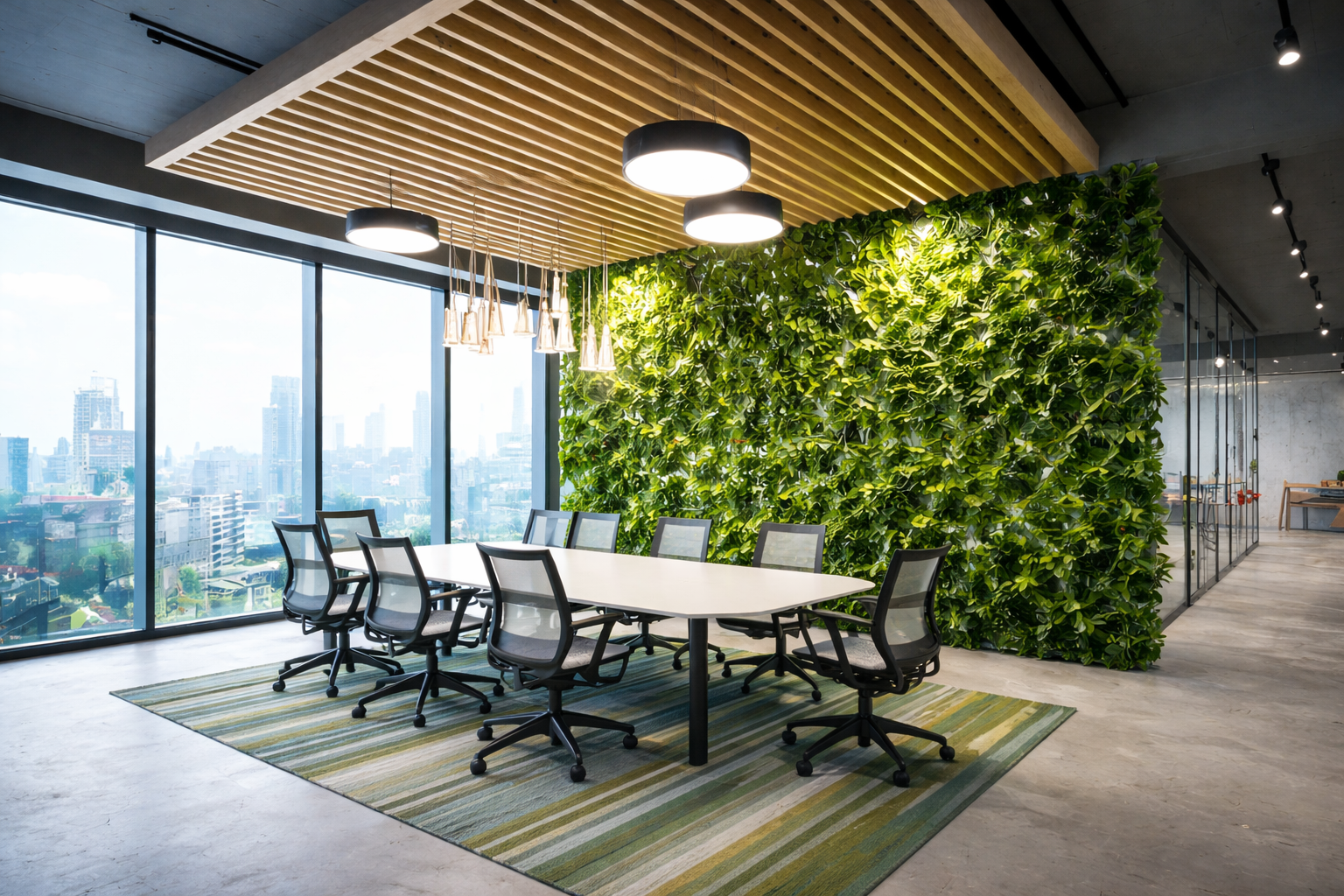
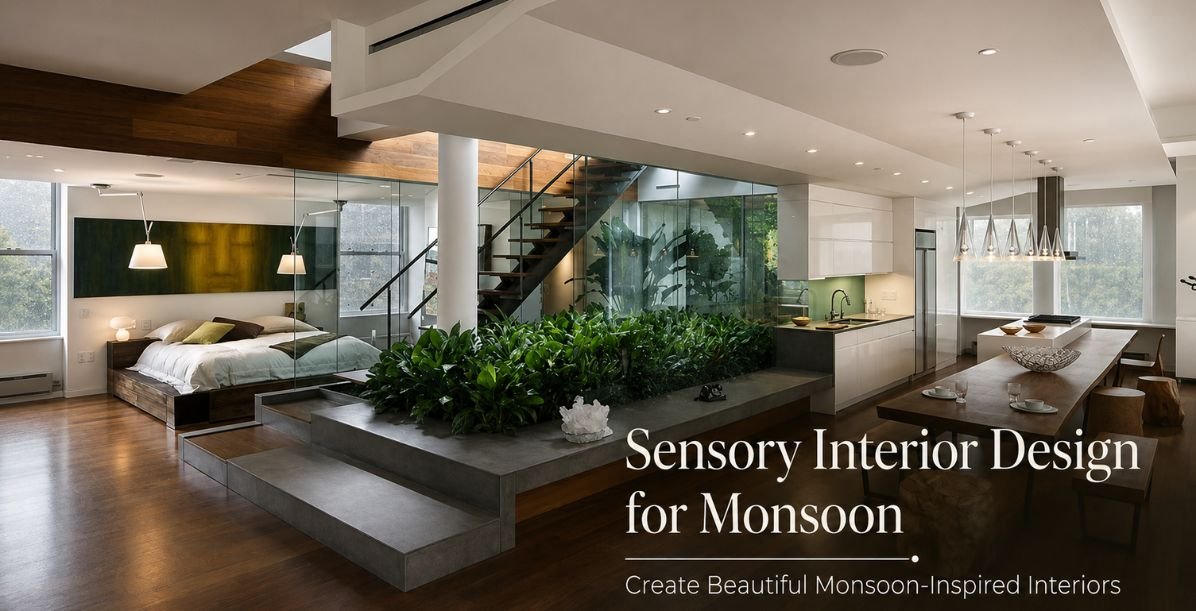
In 2026, biophilic design is no longer an optional aesthetic layer—it has become a core design philosophy for modern offices. Increasing awareness around mental health and workplace stress has pushed organisations to create environments that feel calmer, healthier, and more connected to nature. Natural materials such as wood, stone textures, and earthy finishes are being used extensively, while green walls, indoor plants, and subtle water features help soften rigid office layouts.
Office planning is now heavily focused on maximising natural daylight, improving indoor air quality, and maintaining a visual connection with the outdoors wherever possible. Even in dense urban settings, designers are finding ways to bring nature into the workspace to reduce fatigue, improve focus, and create a more balanced work environment.
2. Hybrid-First Layouts Replace Fixed Seating
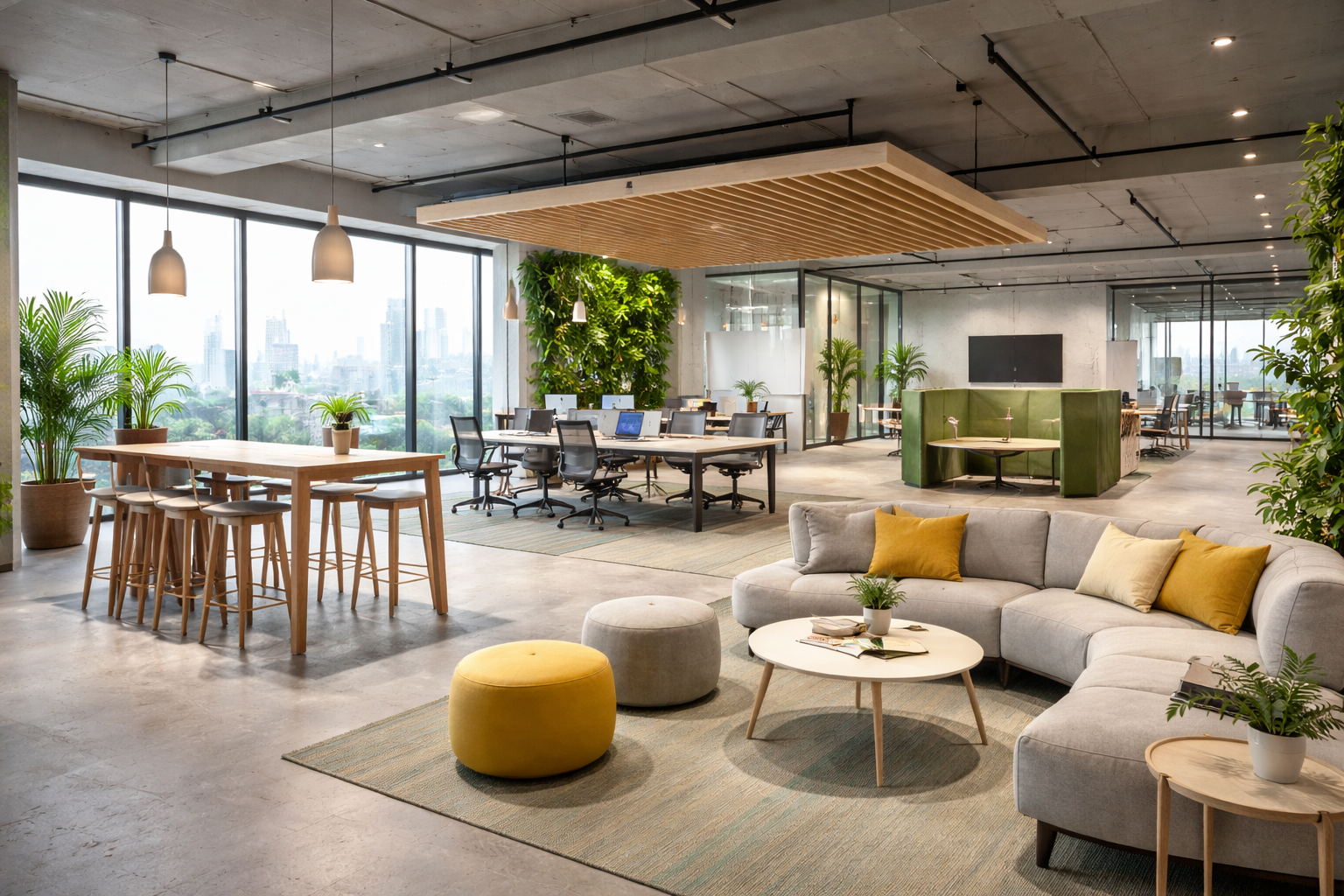
Fixed seating plans and rigid cabin structures are steadily disappearing. In 2026, offices are being designed with flexibility at their core to accommodate hybrid work patterns. Rather than assigning a desk to every employee, spaces are planned with shared workstations, modular furniture, and adaptable zones that can be reconfigured as teams grow or work styles change.
This shift allows offices to function efficiently even with partial daily occupancy, freeing up space for collaboration areas, breakout zones, and informal meeting spaces. The focus is no longer on filling floor area with desks, but on creating a fluid layout that supports both individual work and team interaction.
3. Wellness-Centric Office Design Takes Priority
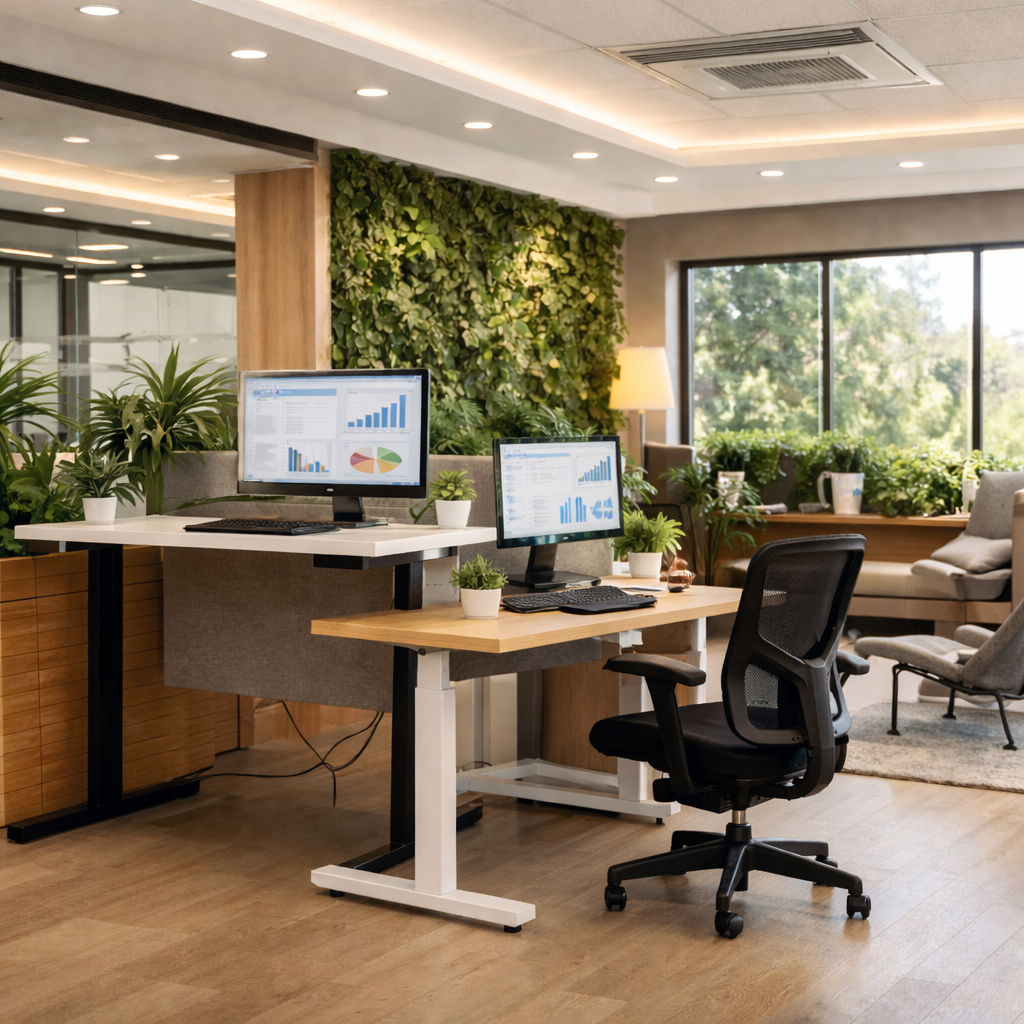
Wellness-driven design has moved beyond being a trend and is now a necessity. In 2026, offices are consciously designed to reduce physical strain and mental fatigue. Ergonomic furniture, height-adjustable desks, and posture-friendly seating have become standard rather than premium upgrades.
Lighting design has also evolved, with glare-free, balanced illumination replacing harsh overhead lighting. Better ventilation systems, low-VOC materials, and improved thermal comfort are now integral parts of office interiors. These elements collectively contribute to healthier work environments that support employee well-being throughout the workday.
4. Acoustic Comfort Becomes a Design Essential
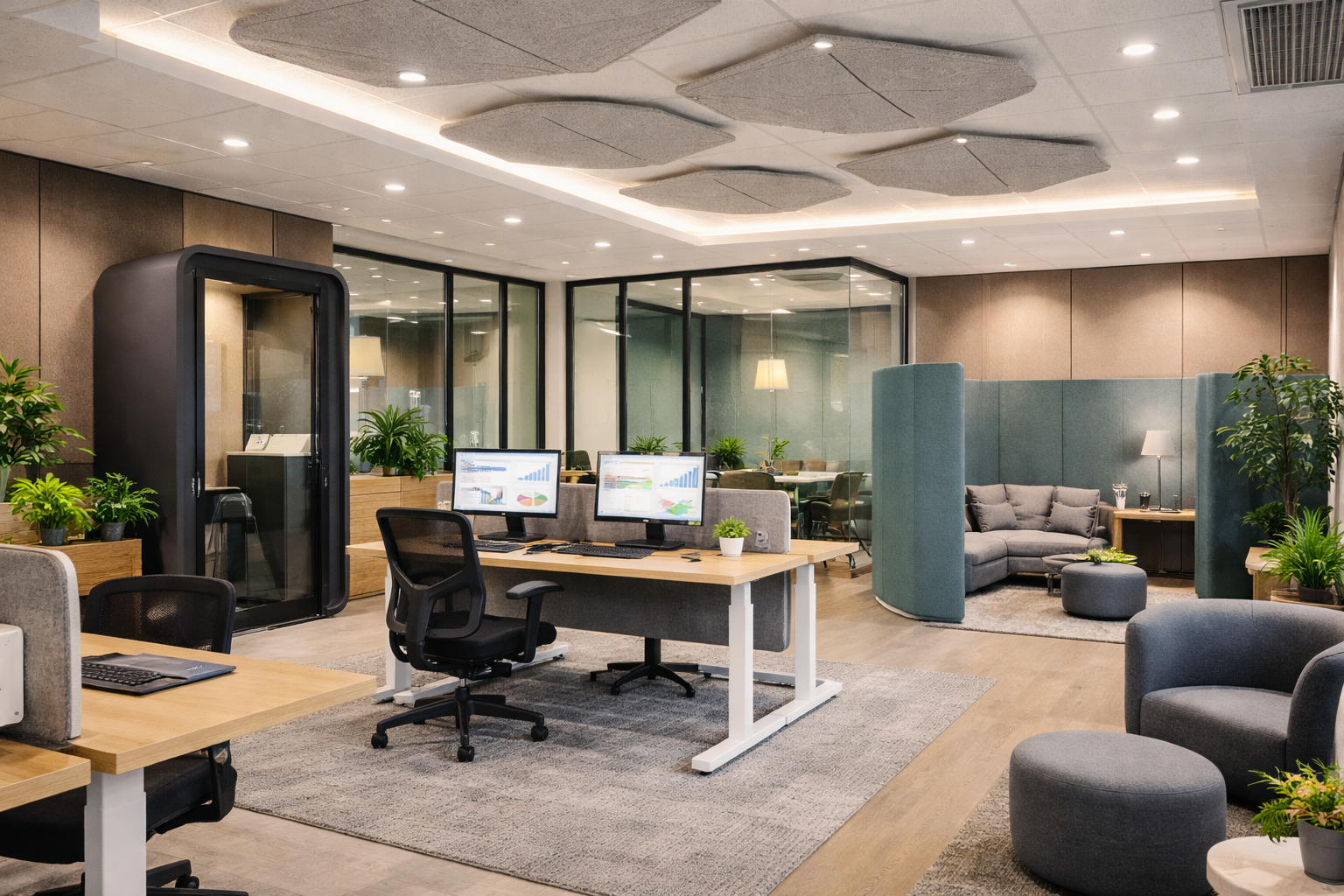
One of the most significant lessons from open-plan offices has been the impact of noise on productivity. In response, 2026 office interiors place strong emphasis on acoustic planning. Sound-absorbing ceiling panels, acoustic wall treatments, carpets, and soft furnishings are used strategically to manage noise levels across different zones.
Dedicated phone booths, focus rooms, and acoustically treated meeting spaces are becoming standard features. Rather than eliminating open layouts, designers are refining them to ensure that collaboration does not come at the cost of concentration.
5. Technology Integration Without Visual Clutter
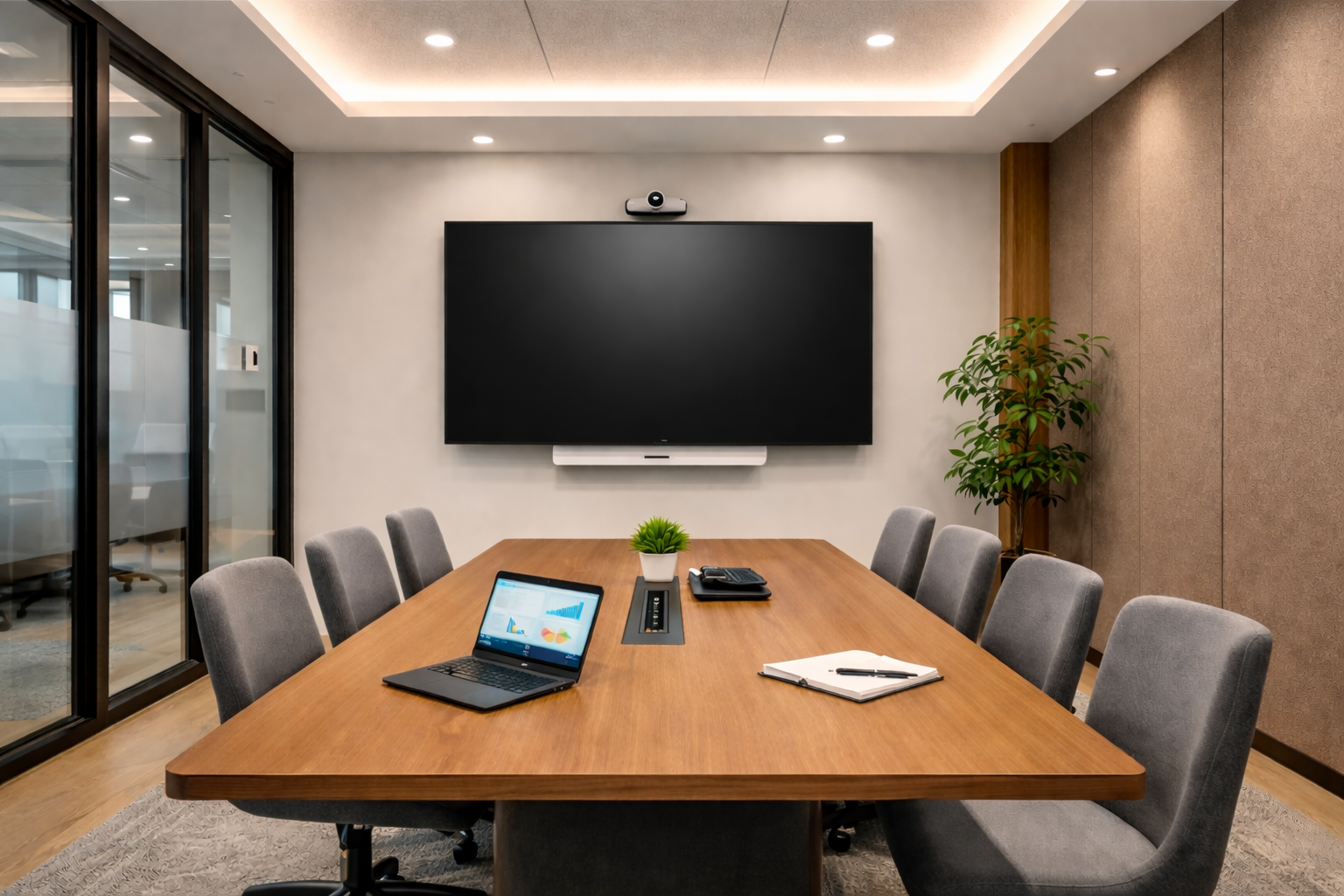
As offices become smarter, the role of technology has shifted from being visible to being seamlessly embedded. In 2026, technology is integrated into office interiors in a way that feels intuitive and unobtrusive. Clean cable management, concealed power points, and well-planned AV setups ensure that spaces remain visually calm while fully functional.
Meeting rooms are now designed with virtual collaboration in mind, focusing on camera angles, lighting balance, and sound quality. Smart lighting and climate control systems further enhance comfort by automatically adjusting to usage patterns without requiring manual intervention.
6. Brand Identity Reflected Through Spatial Design
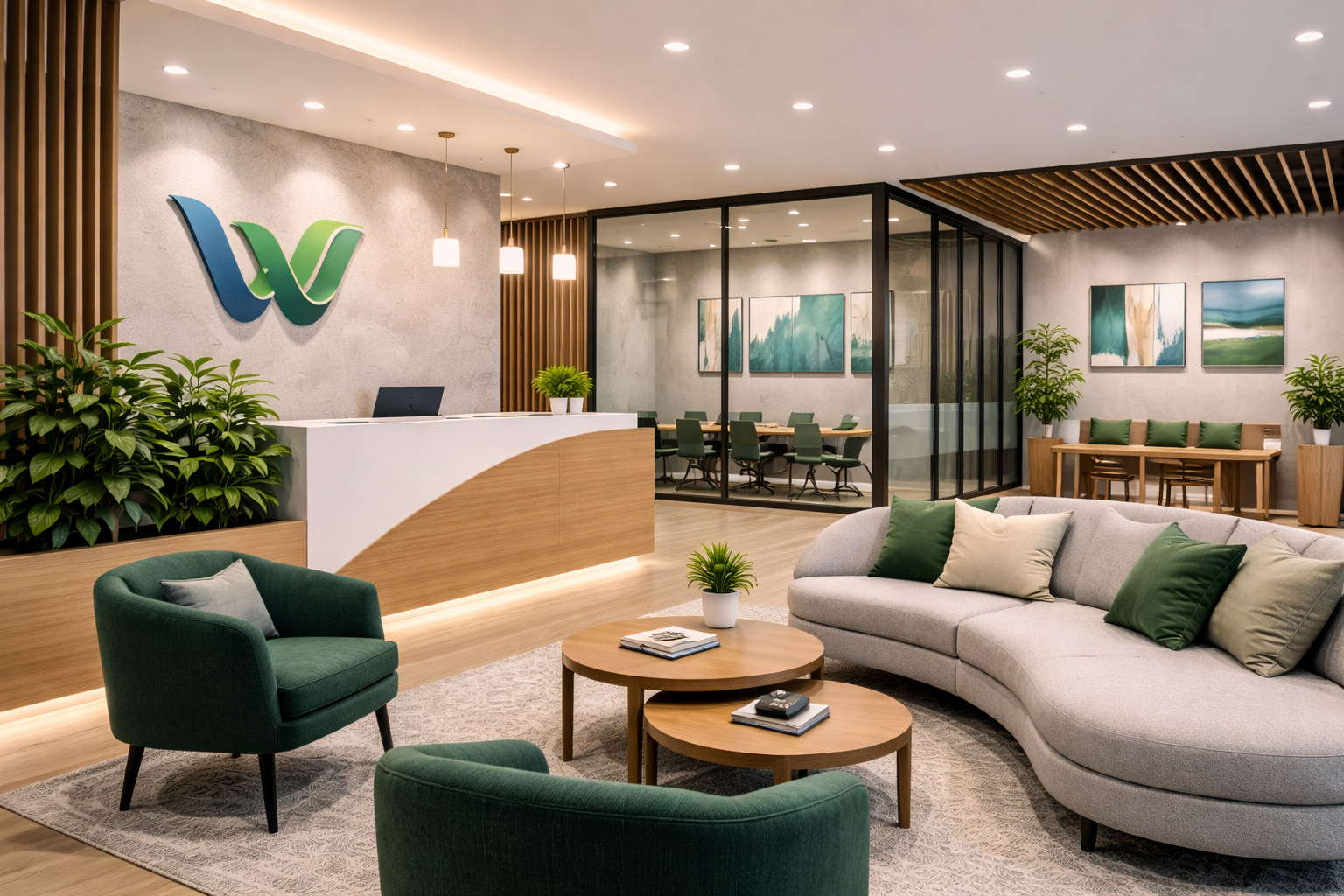
Office interiors are increasingly seen as a physical representation of a company’s culture and values. Rather than relying on oversized logos or loud branding elements, 2026 offices express brand identity through material choices, colour palettes, and spatial flow.
Custom finishes, curated artwork, and subtle graphic elements are used to tell a brand story throughout the workspace. This approach creates environments that feel authentic and memorable, reinforcing organisational identity without overwhelming the design.
7. Practical Sustainability Shapes Material Choices
Sustainability in office interiors has matured into a practical, long-term approach. Instead of focusing on short-term trends, 2026 designs prioritise materials and systems that are durable, energy-efficient, and easy to maintain. Locally sourced materials, energy-saving lighting, and finishes that age gracefully are preferred over disposable design solutions.
The emphasis is on creating offices that remain relevant and functional for years, reducing the need for frequent renovations and unnecessary waste.
8. Collaboration Spaces Replace Oversized Boardrooms
Traditional boardrooms are being replaced by a variety of collaboration spaces designed for different types of interaction. In 2026, offices feature informal meeting zones, brainstorming corners, and flexible discussion areas that encourage spontaneous communication.
These spaces are designed to be approachable and comfortable, making collaboration feel natural rather than formal. As a result, teams engage more frequently and decision-making becomes faster and more efficient.
9. Custom Craftsmanship Adds Character to Offices
Mass-produced interiors are gradually giving way to customised design elements. Handcrafted furniture, bespoke partitions, and locally crafted details are being incorporated to add warmth and individuality to office spaces.
This approach not only enhances visual appeal but also improves quality and longevity. Custom craftsmanship allows offices to stand out while maintaining a strong sense of identity and purpose.
10. Outcome-Driven Office Planning Defines the Future
Perhaps the most defining trend of 2026 is the shift toward outcome-driven design. Offices are no longer planned around aesthetics alone but around how people actually work. Each zone is designed with a clear purpose—whether it is focused work, collaboration, learning, or relaxation.
By aligning spatial design with organisational goals and employee behaviour, offices become more efficient, engaging, and future-ready.
Offices that succeed are the ones designed around how people actually work—not how spaces look in renders.
Final Perspective
Office interior design in 2026 is about creating environments that support people, adapt to change, and reflect purpose. Successful workspaces balance technology with warmth, flexibility with structure, and aesthetics with performance.
At The Wooden Strings, we believe that thoughtfully designed offices are not just workplaces—they are strategic assets that evolve with your business.
.png)
.png)
.jpg)

 Chat With Diva