
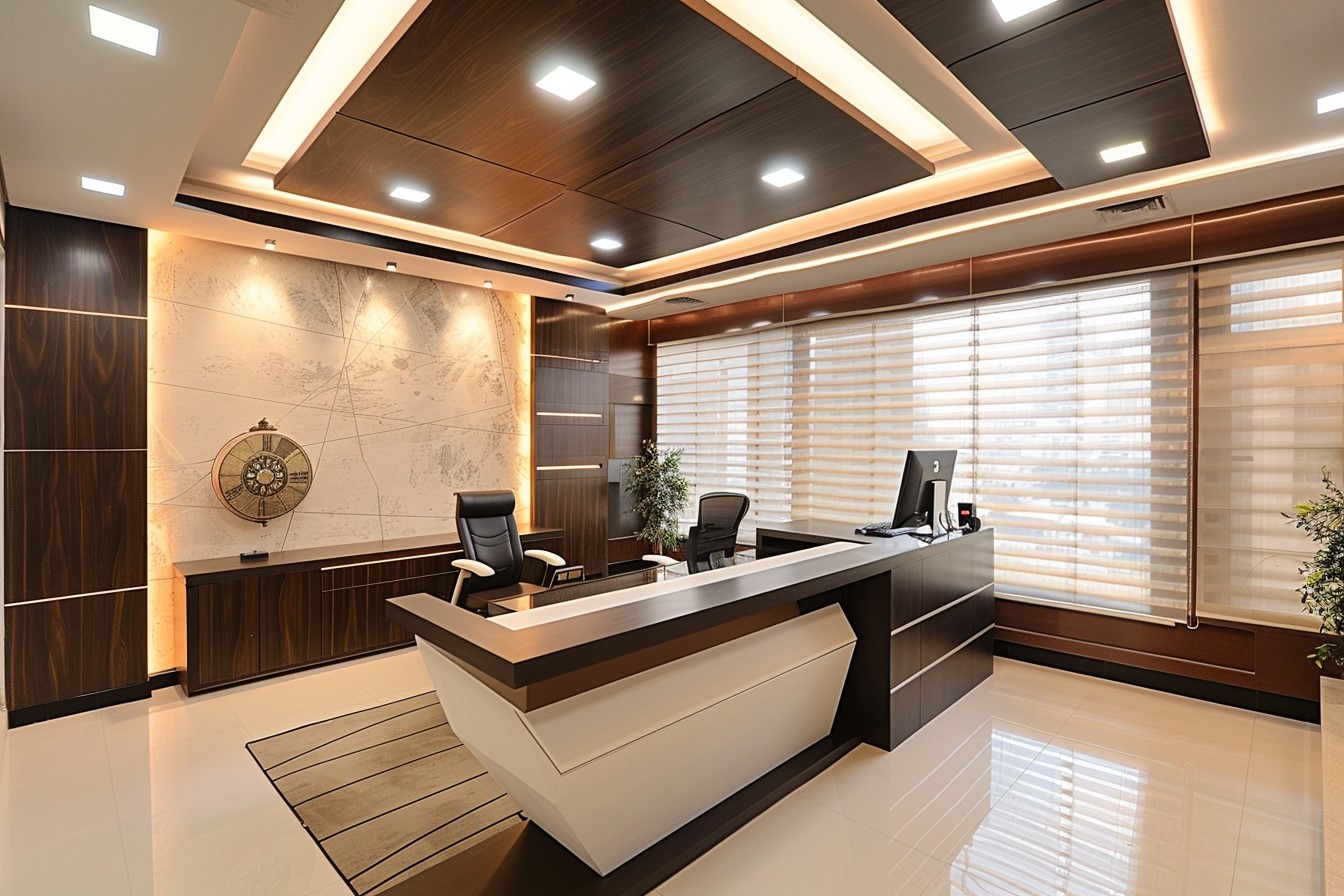
In modern workplaces, ceilings are no longer an afterthought. They’ve become one of the strongest visual and functional tools in office interior design especially for brands that want their workspace to feel bold, contemporary, and future-ready.
A statement false ceiling doesn’t just hide wiring or improve lighting. It defines scale, enhances acoustics, supports branding, and subtly influences how employees and visitors experience the space.
This blog explores how statement false ceilings elevate bold office interior projects, what design approaches work best, and how to choose the right ceiling concept for your workspace.
Why False Ceilings Matter in Bold Office Interiors
In offices that aim to stand out—tech firms, creative agencies, corporate headquarters, design studios—the ceiling becomes a design anchor.
A well-designed false ceiling helps to:
Create a strong first impression
Visually zone large open-plan offices
Improve acoustics and lighting efficiency
Reinforce brand identity through form, material, and colour
Add depth and dimension to otherwise flat spaces
For bold office interiors, ceilings are not meant to blend in—they’re meant to lead the visual narrative.
What Makes a False Ceiling a “Statement” Ceiling?
A statement ceiling goes beyond standard gypsum panels. It draws attention through design intent, not excess.
Key characteristics include:
Strong geometry or layered forms
Exposed or semi-exposed structural elements
Dramatic lighting integration
Textural or material contrast
Purpose-driven visual impact
The goal isn’t decoration—it’s controlled boldness that complements the office’s function and culture.
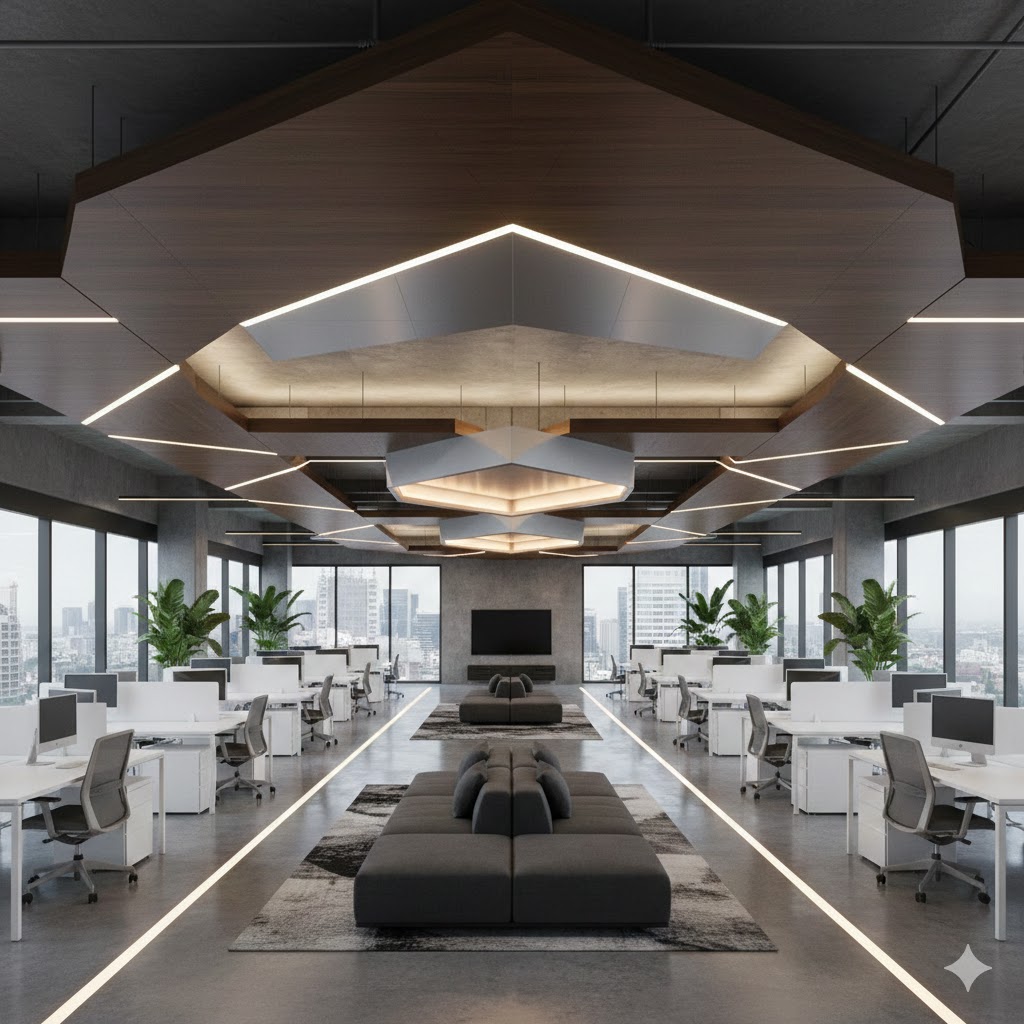
Popular Statement False Ceiling Styles for Offices
1. Layered & Floating Ceilings
Floating ceiling panels with recessed lighting create a sense of depth and movement. They work exceptionally well in boardrooms, reception areas, and executive cabins.
2. Linear & Slatted Ceilings
Wooden or metal slats arranged in linear patterns add rhythm and sophistication. These ceilings are popular in modern corporate offices and co-working spaces.
3. Exposed + Designed Ceilings
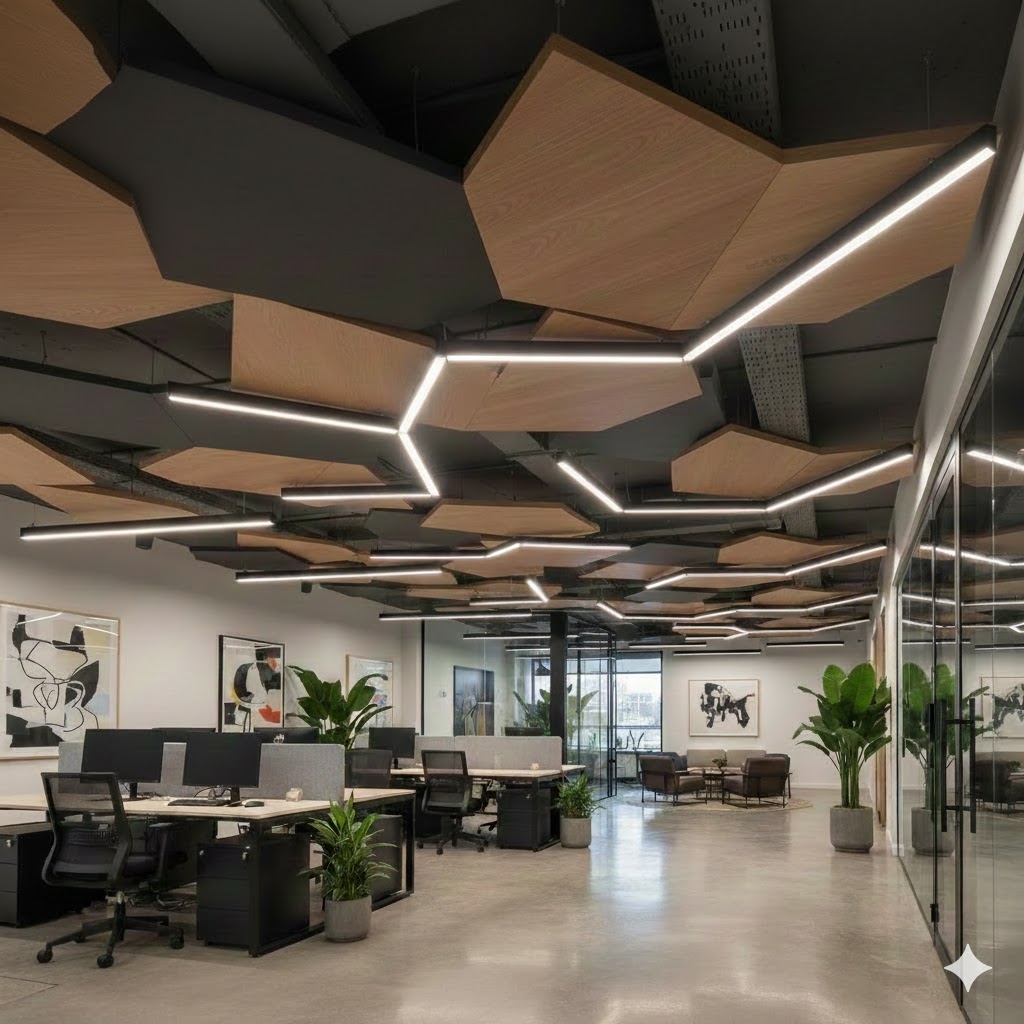
Leaving ducts and services exposed—but painted, aligned, and lit intentionally—creates an industrial, bold aesthetic ideal for startups and creative studios.
4. Geometric Ceiling Designs
Angular panels, hexagonal modules, or asymmetric layouts introduce visual drama and suit offices that want a strong design identity.
Lighting: The Backbone of Statement Ceilings
Lighting determines whether a statement ceiling looks refined or overwhelming.
Effective ceiling-light strategies include:
Cove lighting for soft, ambient glow
Linear LED profiles to highlight ceiling geometry
Spotlights for task zones
Accent lighting to highlight textures or layers
When lighting and ceiling design work together, the ceiling becomes architectural, not ornamental.
Acoustic Performance: Bold Yet Functional
A common mistake in bold ceiling design is ignoring acoustics.
Modern statement ceilings often integrate:
Acoustic baffles
Perforated panels
Fabric-wrapped ceiling elements
Sound-absorbing slats
This ensures the office looks bold without compromising productivity or comfort.
Matching Ceiling Design to Office Function
Not every area needs the same ceiling intensity.
Reception & waiting areas: High-impact statement ceilings
Boardrooms: Layered ceilings with acoustic control
Open workspaces: Linear or exposed ceilings with acoustic balance
Cabins & focus rooms: Minimal but refined ceiling designs
A smart office interior uses ceilings to guide experience, not overwhelm it.
Common Mistakes to Avoid
Over-designing without considering scale
Ignoring maintenance access
Poor lighting integration
Using bold designs in low-height spaces
Choosing materials without acoustic planning
Bold design works best when it’s strategic and restrained.
Final Thoughts
Statement false ceilings are no longer optional in bold office interior projects—they’re a defining element. When designed thoughtfully, they enhance aesthetics, support functionality, and express brand identity in ways walls and furniture cannot.
In office interior design, what’s above you matters as much as what surrounds you.
.png)
.png)
.jpg)



 Chat With Diva